Subscribe to our newsletters!

You can’t redistribute what hasn’t been produced

Column by Richard Randall

I feel the need to repeat something I know I’ve said before: All national wealth is created by commercial activity. In other words, all wealth is created by business. By business I mean anything from an individual entrepreneur to a major corporation. It seems today that a lot of people with anti-business attitudes don’t understand that.

Wealth is created when value is added. This happens when individuals or businesses create products or services that others are willing to exchange for.

Money itself is not wealth. It is just a means of exchange. When government prints money, it doesn’t create wealth. In fact, if more money is added to the economic system without concurrently increasing the production of wealth by commercial activity, the value of all the money in the system declines. That’s what happens in banana republics with runaway inflation.
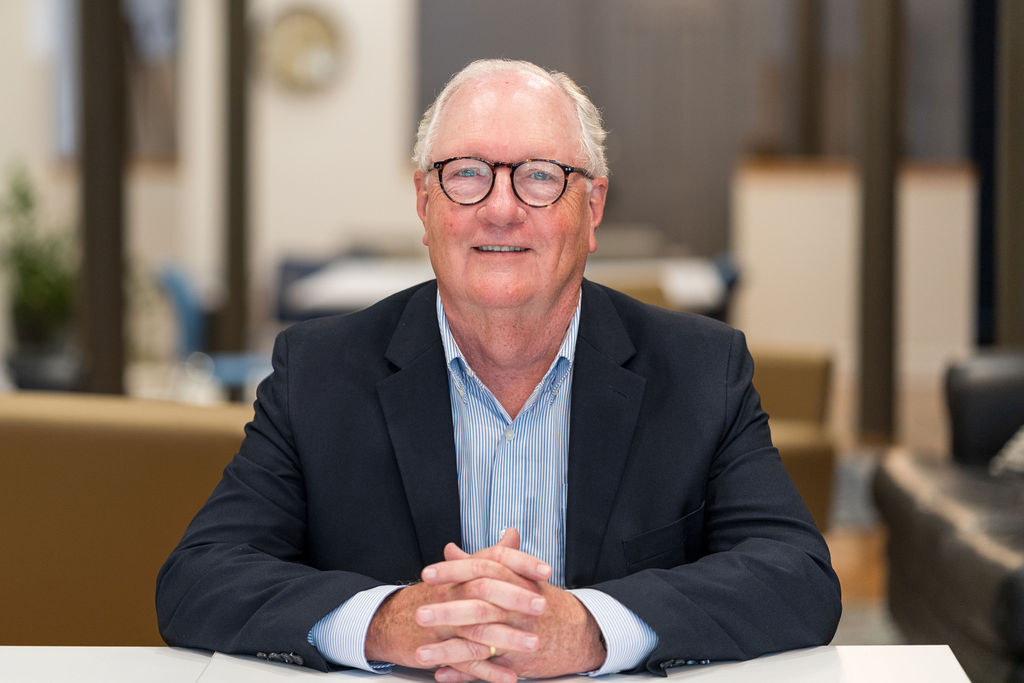
Richard Randall

Government doesn’t create wealth when it borrows money. When the government borrows money, it commits future tax receipts to pay the debt. It commits that part of the future wealth created by individuals and businesses though commercial activity which it can collect via taxation. Government borrowing is a redistribution of wealth.

Taxation and redistribution don’t create wealth. They move existing wealth around. Redistribution can serve purposes like reducing inequality or funding public goods, but it doesn’t by itself make the economic pie bigger. All the government does is redistribute slices of that pie.

Government does have a role in helping businesses prosper, by way of sensible regulations, and by supporting the creation of infrastructure. Government can support education and research, which are exploited by businesses and individuals. But don’t forget it is commercial activity that pays for the infrastructure, the research and the education support.

I’ve seen some claims lately that nonprofit charitable organizations are adding value to the economy, in other words creating wealth. In general, charitable organizations don’t create wealth; they consume and redistribute it. That isn’t to take anything away from the importance of charitable organizations. They do amazing, important things, and they provide jobs for many people. But in almost every case, it is all funded with wealth created by commercial activity, which is then donated to these organizations.

Some charitable organizations create parallel organizations to engage in “social entrepreneurship”- wealth building via business activity – which they can exploit to reduce their dependence on fundraising. Those are an exception to the rule.

Why don’t most people understand the issue of wealth creation? I think it’s because it isn’t taught in school, it doesn’t make a compelling story for journalists, and business leaders fail to take any part in educating the public.

You don’t have to look too hard to find articles, op-ed columns, and social media posts railing about the evils of greedy businesses or business owners or CEOs, as if they are the cause of people’s economic problems. We need more knowledgeable people in business speaking up about this issue of wealth creation, getting people to understand where all of our wealth as people and as a nation is created.


Richard Randall is founder and president of management consulting firm New Level Advisors in Springettsbury Township, York County. Email him at [email protected].

Executives Insights is a recurring feature from biznewsPA that provides local business executives and leaders a platform for sharing advice and perspective with the business community of Central Pennsylvania. If you are interested in contributing an executive insight, email [email protected].

Column by Richard Randall

I feel the need to repeat something I know I’ve said before: All national wealth is created by commercial activity. In other words, all wealth is created by business. By business I mean anything from an individual entrepreneur to a major corporation. It seems today that a lot of people with anti-business attitudes don’t understand that.

Wealth is created when value is added. This happens when individuals or businesses create products or services that others are willing to exchange for.

Money itself is not wealth. It is just a means of exchange. When government prints money, it doesn’t create wealth. In fact, if more money is added to the economic system without concurrently increasing the production of wealth by commercial activity, the value of all the money in the system declines. That’s what happens in banana republics with runaway inflation.

Richard Randall

Government doesn’t create wealth when it borrows money. When the government borrows money, it commits future tax receipts to pay the debt. It commits that part of the future wealth created by individuals and businesses though commercial activity which it can collect via taxation. Government borrowing is a redistribution of wealth.

Taxation and redistribution don’t create wealth. They move existing wealth around. Redistribution can serve purposes like reducing inequality or funding public goods, but it doesn’t by itself make the economic pie bigger. All the government does is redistribute slices of that pie.

Government does have a role in helping businesses prosper, by way of sensible regulations, and by supporting the creation of infrastructure. Government can support education and research, which are exploited by businesses and individuals. But don’t forget it is commercial activity that pays for the infrastructure, the research and the education support.

I’ve seen some claims lately that nonprofit charitable organizations are adding value to the economy, in other words creating wealth. In general, charitable organizations don’t create wealth; they consume and redistribute it. That isn’t to take anything away from the importance of charitable organizations. They do amazing, important things, and they provide jobs for many people. But in almost every case, it is all funded with wealth created by commercial activity, which is then donated to these organizations.

Some charitable organizations create parallel organizations to engage in “social entrepreneurship”- wealth building via business activity – which they can exploit to reduce their dependence on fundraising. Those are an exception to the rule.

Why don’t most people understand the issue of wealth creation? I think it’s because it isn’t taught in school, it doesn’t make a compelling story for journalists, and business leaders fail to take any part in educating the public.

You don’t have to look too hard to find articles, op-ed columns, and social media posts railing about the evils of greedy businesses or business owners or CEOs, as if they are the cause of people’s economic problems. We need more knowledgeable people in business speaking up about this issue of wealth creation, getting people to understand where all of our wealth as people and as a nation is created.


Richard Randall is founder and president of management consulting firm New Level Advisors in Springettsbury Township, York County. Email him at [email protected].

Executives Insights is a recurring feature from biznewsPA that provides local business executives and leaders a platform for sharing advice and perspective with the business community of Central Pennsylvania. If you are interested in contributing an executive insight, email [email protected].

Share:

Gladly Sponsored By:

The main tool we use for the BizNewsPA newsletter is ActiveCampaign.

ActiveCampaign helps us manage our subscribers, build the newsletter, and schedule it for our bright and early release time.

If you think ActiveCampaign can help you and your business, click here.

More Central PA News

Transportation

Airport cuts could ripple through Central PA

Air travel in the U.S. will require vigilance in the days ahead as the federal government orders airlines to impose traffic cuts. The reductions appear to target 40 of the nation’s largest airports, including hubs in Baltimore, Philadelphia and Washington, D.C., according to a list obtained by The Associated Press. But the ripples could reach smaller […]

To access this post, you must purchase biznewsPA Subscription or biznewsPA Team Subscriptions.

Read More »
Construction

Hospital-to-apartment conversion blessed by Harrisburg planners

At a meeting last night, Harrisburg’s planning commission unanimously approved a proposal to put 130 apartments in a former hospital in the city’s uptown neighborhood. The plans, pitched by an affiliate of Philadelphia-area developer Pennmark, represent the next step in the potential rebirth of a sprawling former healthcare campus in the 2600 block of North Third […]

To access this post, you must purchase biznewsPA Subscription or biznewsPA Team Subscriptions.

Read More »
Government

Judges retained, mayors elected

The ayes have it. By a margin of roughly three to two, Pennsylvania voters retained three state Supreme Court justices yesterday, preserving the court’s Democratic five-to-two majority. Justices Christine Donohue, Kevin Dougherty and David Wecht each garnered more than 2 million “yes” votes on the question of whether they should remain on the bench for […]

To access this post, you must purchase biznewsPA Subscription or biznewsPA Team Subscriptions.

Read More »
Nonprofit

Efforts to bolster food aid gather steam during federal lapse

Businesses and charities in Central Pennsylvania are scrambling to blunt the effects of a lapse in federal food benefits that sustain tens of thousands of local residents. Nonprofits are working to shore up alternative sources of sustenance, while grocers and other retailers navigate the impact on revenue, product purchasing and employee scheduling. Retailers also are […]

To access this post, you must purchase biznewsPA Subscription or biznewsPA Team Subscriptions.

Read More »
Government

PA judges at center of high-profile retention race

Pennsylvania voters will decide tomorrow whether to retain three Supreme Court justices in what has become one of the state’s most expensive and partisan judicial races ever. Those arguing in favor of retention, including Gov. Josh Shapiro, warn that “no” votes could jeopardize abortion and voting rights.  Those arguing against retention argue that the three justices in question […]

To access this post, you must purchase biznewsPA Subscription or biznewsPA Team Subscriptions.

Read More »
Health Care

Uncertainty surrounds shopping for health plans

Projections suggest that rising costs will dissuade Pennsylvania residents from buying health insurance through the state’s Obamacare exchange, known as Pennie. Those forecasts will now face a real-world test. Pennie’s open enrollment period starts tomorrow, Nov. 1, for people who want coverage in place for 2026. Enrollment through Pennie has been growing over the last […]

To access this post, you must purchase biznewsPA Subscription or biznewsPA Team Subscriptions.

Read More »