Subscribe to our newsletters!

What great leaders notice first

Column by Brandon Rogers

The longer someone leads, the less impressed they become with raw talent alone.

Experience has a way of teaching leaders that the rarest people in a room are not always the loudest, the fastest, or even the most outwardly confident. Over time, truly seasoned leaders begin developing a different instinct entirely — an almost immediate sensitivity to the invisible strengths sitting quietly inside other people. They learn how to recognize the person whose steadiness calms an entire team without ever demanding attention for it. The individual whose emotional intuition catches problems long before metrics do. The employee whose consistency quietly holds together the emotional fabric of an organization while others receive the recognition.

And somewhere along the way, leadership itself begins changing shape.

The most extraordinary leaders are almost never obsessed with proving their own brilliance… and truthfully, most would feel uncomfortable even applying the word to themselves. They become so attuned to recognizing brilliance in other people that they often spot it long before the person carrying it fully recognizes it within themselves.

That requires a particular kind of awareness — the humility to recognize your own deficits while simultaneously developing an almost surgical sensitivity to the strengths surrounding you. Great leaders eventually stop entering rooms asking, How do I establish myself here? and begin asking something far more consequential:

Brandon Rogers

What exists in this person that has not fully been seen yet?

The irony is that many high-performing organizations quietly lose this ability as success compounds. Competence creates gravity. Titles accumulate. Pressure sharpens communication. The room slowly begins adjusting itself around authority, and eventually people stop interacting with leaders naturally and start interacting with them carefully.

Questions become more filtered. Conversations are more measured. Honesty slightly restrained.

And beneath all of it, something subtle begins taking shape inside the culture: people stop moving toward leadership relationally and start orbiting it professionally.

Most leaders never notice the moment this happens.

Not because they lack empathy, but because responsibility itself can become consuming. High-capacity people often assume their sacrifice communicates care automatically. They believe their standards, consistency, and work ethic should naturally reassure the people around them. In many ways, they do. Discipline creates stability. Excellence inspires confidence. Competence builds trust in outcomes.

But human beings rarely give their best because they are merely impressed. They give their best when they feel deeply seen.

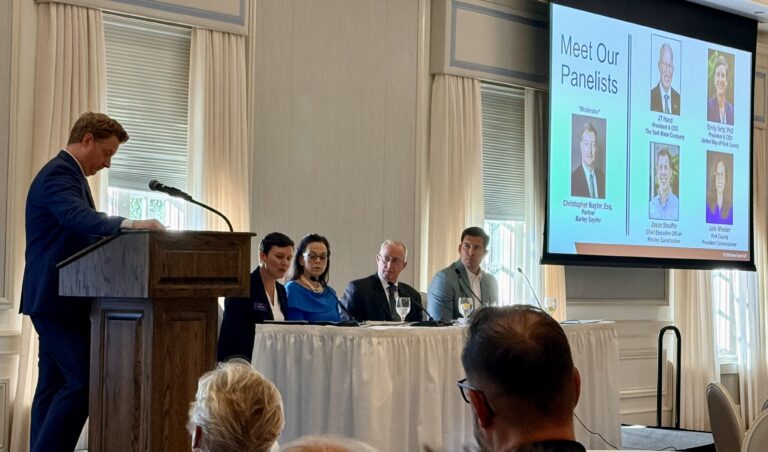
That realization sat quietly beneath a conversation I recently had with a group of exceptionally gifted owners and leaders – people operating at an extraordinarily high level inside their profession, each carrying immense responsibility, each deeply invested in the future of the organization they were building together. We gathered initially to discuss operational structure, leadership flow, decision-making dynamics, and the tension that naturally emerges when ownership and execution begin overlapping inside a growing organization.

But somewhere in the middle of the conversation, the discussion shifted away from systems and toward something far more human.

We began talking about the subtle difference between operating a business and truly owning one. Operators naturally focus on execution, correction, efficiency, and measurable outcomes. Owners eventually realize they are shaping something much more fragile and much more powerful than operational success alone.

They are shaping emotional environments.

That distinction matters because many leaders unknowingly construct personas around themselves that quietly guarantee validation. The brilliant founder. The untouchable executive. The highly respected expert whose approval carries unusual gravity in the room. These identities often emerge unintentionally, yet over time they create emotional distance that feels protective for the leader while becoming restrictive for everyone else.

Distance preserves authority, but trust is what deepens influence.

The strongest cultures I’ve encountered were never built by leaders who needed constant reminders of their intelligence. They were built by people secure enough to become approachable without sacrificing excellence. Leaders who understood that confidence and humility are not opposing forces, but complementary ones. People willing to remain extraordinarily disciplined while simultaneously becoming deeply human.

That requires a very particular kind of courage — the willingness to move first relationally. To disarm tension before demanding performance. To ask thoughtful questions before issuing corrections. To sit beside people instead of perpetually above them. In high-pressure environments especially, this posture becomes profoundly important because teams are already carrying emotional and operational weight of their own. Standards still matter. Accountability still matters. Excellence absolutely matters.

But people also need emotional safety.

And emotional safety is rarely created through charisma or force. It emerges through consistency, attentiveness, visible care, and the unmistakable sense that leadership sees people as human beings before seeing them as functions inside an organization.

One of the more fascinating realizations from our discussion was recognizing that investment protection, in its truest sense, has very little to do with creating emotional distance from a team. In many ways, the opposite is true. The leaders who protect organizations best are often the ones willing to care most visibly about the people inside them.

Genuinely.

Because when individuals believe ownership sees them not merely as labor, but as human beings carrying burdens, aspirations, insecurities, exhaustion, ambition, families, and dignity, something extraordinary begins happening inside the culture. Accountability strengthens naturally. Loyalty deepens. Excellence stops feeling extracted and starts feeling shared.

People work differently when they feel emotionally accompanied.

And perhaps that is the quiet paradox sitting beneath meaningful leadership: the higher someone rises professionally, the easier it becomes to build emotional altitude around themselves. Responsibility does that. Pressure does that. Success certainly does that.

Yet the leaders people remember most are rarely the ones who appeared untouchable.

They are the ones who made other people feel seen while carrying extraordinary responsibility themselves.

That is stewardship in its most mature form.

The most effective leaders are rarely the ones creating the greatest distance between themselves and the people around them. They are the ones secure enough to step down from the posture of importance long enough to truly see the people carrying the weight beside them… and in doing so, they often become the very reason those people are willing to carry it at all.


Brandon Rogers is founder and principal of 2R Consulting Group, a financial consulting firm based in the Harrisburg area.

Executives Insights is a recurring feature from biznewsPA. It provides local business executives and leaders a platform for sharing advice and perspective with the business community of Central Pennsylvania. If you are interested in contributing an executive insight, email [email protected].

Column by Brandon Rogers

The longer someone leads, the less impressed they become with raw talent alone.

Experience has a way of teaching leaders that the rarest people in a room are not always the loudest, the fastest, or even the most outwardly confident. Over time, truly seasoned leaders begin developing a different instinct entirely — an almost immediate sensitivity to the invisible strengths sitting quietly inside other people. They learn how to recognize the person whose steadiness calms an entire team without ever demanding attention for it. The individual whose emotional intuition catches problems long before metrics do. The employee whose consistency quietly holds together the emotional fabric of an organization while others receive the recognition.

And somewhere along the way, leadership itself begins changing shape.

The most extraordinary leaders are almost never obsessed with proving their own brilliance… and truthfully, most would feel uncomfortable even applying the word to themselves. They become so attuned to recognizing brilliance in other people that they often spot it long before the person carrying it fully recognizes it within themselves.

That requires a particular kind of awareness — the humility to recognize your own deficits while simultaneously developing an almost surgical sensitivity to the strengths surrounding you. Great leaders eventually stop entering rooms asking, How do I establish myself here? and begin asking something far more consequential:

Brandon Rogers

What exists in this person that has not fully been seen yet?

The irony is that many high-performing organizations quietly lose this ability as success compounds. Competence creates gravity. Titles accumulate. Pressure sharpens communication. The room slowly begins adjusting itself around authority, and eventually people stop interacting with leaders naturally and start interacting with them carefully.

Questions become more filtered. Conversations are more measured. Honesty slightly restrained.

And beneath all of it, something subtle begins taking shape inside the culture: people stop moving toward leadership relationally and start orbiting it professionally.

Most leaders never notice the moment this happens.

Not because they lack empathy, but because responsibility itself can become consuming. High-capacity people often assume their sacrifice communicates care automatically. They believe their standards, consistency, and work ethic should naturally reassure the people around them. In many ways, they do. Discipline creates stability. Excellence inspires confidence. Competence builds trust in outcomes.

But human beings rarely give their best because they are merely impressed. They give their best when they feel deeply seen.

That realization sat quietly beneath a conversation I recently had with a group of exceptionally gifted owners and leaders – people operating at an extraordinarily high level inside their profession, each carrying immense responsibility, each deeply invested in the future of the organization they were building together. We gathered initially to discuss operational structure, leadership flow, decision-making dynamics, and the tension that naturally emerges when ownership and execution begin overlapping inside a growing organization.

But somewhere in the middle of the conversation, the discussion shifted away from systems and toward something far more human.

We began talking about the subtle difference between operating a business and truly owning one. Operators naturally focus on execution, correction, efficiency, and measurable outcomes. Owners eventually realize they are shaping something much more fragile and much more powerful than operational success alone.

They are shaping emotional environments.

That distinction matters because many leaders unknowingly construct personas around themselves that quietly guarantee validation. The brilliant founder. The untouchable executive. The highly respected expert whose approval carries unusual gravity in the room. These identities often emerge unintentionally, yet over time they create emotional distance that feels protective for the leader while becoming restrictive for everyone else.

Distance preserves authority, but trust is what deepens influence.

The strongest cultures I’ve encountered were never built by leaders who needed constant reminders of their intelligence. They were built by people secure enough to become approachable without sacrificing excellence. Leaders who understood that confidence and humility are not opposing forces, but complementary ones. People willing to remain extraordinarily disciplined while simultaneously becoming deeply human.

That requires a very particular kind of courage — the willingness to move first relationally. To disarm tension before demanding performance. To ask thoughtful questions before issuing corrections. To sit beside people instead of perpetually above them. In high-pressure environments especially, this posture becomes profoundly important because teams are already carrying emotional and operational weight of their own. Standards still matter. Accountability still matters. Excellence absolutely matters.

But people also need emotional safety.

And emotional safety is rarely created through charisma or force. It emerges through consistency, attentiveness, visible care, and the unmistakable sense that leadership sees people as human beings before seeing them as functions inside an organization.

One of the more fascinating realizations from our discussion was recognizing that investment protection, in its truest sense, has very little to do with creating emotional distance from a team. In many ways, the opposite is true. The leaders who protect organizations best are often the ones willing to care most visibly about the people inside them.

Genuinely.

Because when individuals believe ownership sees them not merely as labor, but as human beings carrying burdens, aspirations, insecurities, exhaustion, ambition, families, and dignity, something extraordinary begins happening inside the culture. Accountability strengthens naturally. Loyalty deepens. Excellence stops feeling extracted and starts feeling shared.

People work differently when they feel emotionally accompanied.

And perhaps that is the quiet paradox sitting beneath meaningful leadership: the higher someone rises professionally, the easier it becomes to build emotional altitude around themselves. Responsibility does that. Pressure does that. Success certainly does that.

Yet the leaders people remember most are rarely the ones who appeared untouchable.

They are the ones who made other people feel seen while carrying extraordinary responsibility themselves.

That is stewardship in its most mature form.

The most effective leaders are rarely the ones creating the greatest distance between themselves and the people around them. They are the ones secure enough to step down from the posture of importance long enough to truly see the people carrying the weight beside them… and in doing so, they often become the very reason those people are willing to carry it at all.


Brandon Rogers is founder and principal of 2R Consulting Group, a financial consulting firm based in the Harrisburg area.

Executives Insights is a recurring feature from biznewsPA. It provides local business executives and leaders a platform for sharing advice and perspective with the business community of Central Pennsylvania. If you are interested in contributing an executive insight, email [email protected].

Share:

Gladly Sponsored By:

The main tool we use for the BizNewsPA newsletter is ActiveCampaign.

ActiveCampaign helps us manage our subscribers, build the newsletter, and schedule it for our bright and early release time.

If you think ActiveCampaign can help you and your business, click here.

More Central PA News

Construction

State loan backs $17.2M office project in Lancaster County

Nearly four months after they started construction on a shared headquarters near Mount Joy, two Lancaster County companies landed a low-interest state loan to cover a portion of the nearly $17.2 million price tag. State officials said yesterday they approved a $2.25 million loan to Strickler Investments LLC, a real estate affiliate of solar installer Paradise Energy […]

To access this post, you must purchase biznewsPA Subscription or biznewsPA Team Subscriptions.

Read More »
Government

House panel OKs small-biz tax credits for health plan costs

A state House panel yesterday passed legislation authorizing tax credits for small businesses that help their employees pay for health insurance. The legislation, which was adopted on a party-line vote, is designed to offset higher costs faced by people buying insurance through the Affordable Care Act.  How would it work: Under House Bill 2550, businesses with […]

To access this post, you must purchase biznewsPA Subscription or biznewsPA Team Subscriptions.

Read More »
Education

HACC trustees OK sale, lease of more campus buildings

Trustees of HACC, Central Pennsylvania’s Community College voted yesterday to shed more real estate as they seek to close the school’s budget deficit. The school, which is getting a new president this week, already is selling two buildings in the York area. Joining them on the market are buildings in Gettysburg, Harrisburg and Lancaster. They include HACC’s […]

To access this post, you must purchase biznewsPA Subscription or biznewsPA Team Subscriptions.

Read More »
Accounting

Agency shelves controversial tax proposal

Pennsylvania’s tax collectors have dropped a controversial proposal designed to clarify the corporate income they believe should be taxed. Put forward in spring 2024, the proposed rule aimed to settle long-running sources of friction between the Pennsylvania Department of Revenue and corporate taxpayers by defining just what kinds of business income are subject to taxation […]

To access this post, you must purchase biznewsPA Subscription or biznewsPA Team Subscriptions.

Read More »
Legal

Guilty plea lodged in broadband subsidy fraud

The owner of a Lititz-area wireless company pleaded guilty yesterday to defrauding a federal program that subsidized broadband internet access during the Covid-19 pandemic, according to the U.S. Attorney’s Office for the Eastern District of Pennsylvania.  Krandon Wenger allegedly claimed falsely that hundreds of his company’s customers lived on tribal lands, enabling it to collect […]

To access this post, you must purchase biznewsPA Subscription or biznewsPA Team Subscriptions.

Read More »
Energy

TMI restart overcomes speed bump tied to grid connection

Baltimore-based power company Constellation Energy overcame a crucial hurdle yesterday in its bid to restart an idled nuclear plant on Three Mile Island in Dauphin County. Federal energy regulators gave Constellation clearance to connect the plant — now known as the Crane Clean Energy Center — to the grid by transferring connection rights held by […]

To access this post, you must purchase biznewsPA Subscription or biznewsPA Team Subscriptions.

Read More »