When Mike McKenna started in nonprofit work in Lancaster County more than a decade ago, he focused on helping people stabilize their finances so they could afford homes and apartments.
As the newly appointed executive director of startup nonprofit Lancaster Housing Works, he is focused on the other side of the equation – boosting the supply of homes and apartments that are actually affordable.
“There’s a lot of dynamics both nationally and locally that I think are constraining the housing market in such a way that it’s making it hard for a lot of people to find housing they can afford,” said McKenna. He also is vice president of strategic initiatives for the High Foundation, which launched Lancaster Housing Works this year with $10 million in seed money
The startup nonprofit is focused primarily on people who make between 50% and 80% of an area’s median income – often too high to qualify for government aid but not enough to comfortably absorb the cost of housing.
The nonprofit is tackling the challenges from several directions. They include acquiring affordable housing and keeping it that way; advocating for zoning and policy reforms that make it easier to build affordable housing; and cultivating partnerships with other nonprofits and employers, who have an incentive to ensure their workers can find adequate housing nearby.
The work includes finding people willing to speak up at municipal meetings where housing plans are up for debate. The countywide Coalition for Sustainable Housing, for example, has been trying to bring the voices of housing champions to the conversation.
“One of the key things that we’ve found in Lancaster is that there’s a pattern for very vocal opposition and sort of crickets when it comes to people who are supportive but just aren’t necessarily engaged in that municipal process,” McKenna said.
The mission energizes McKenna, who began his nonprofit career at the Community Action Partnership of Lancaster County. He worked next for Tabor Community Services and oversaw its merger with Lancaster Housing Opportunity Partnership to form Tenfold. He led the merged nonprofit until 2022, when he stepped down and formed an independent consulting business. The move gave him more flexibility to care for his and his wife’s young children, he said.
“It feels like the different roles and experiences I’ve had before this one really lend themselves optimally to this role,” he said.
He spoke recently about the new job, the forces that inflate housing costs in Lancaster and around the U.S., and the efforts to bring them down. The following interview has been edited for length and clarity.
biznewsPA: You’ve been working in this field a long time. Has there ever not been a crisis?
Mike McKenna: In the 1950s, there was a lot of federal money and options to make more housing and to make it financially viable. You had initiatives like the GI bill, a massive expansion and good manufacturing jobs. I’m sure there were people at the lower end of the income spectrum who were struggling to afford rent. And during that period, you had redlining in cities that was discriminatory for people of color. So, it wasn’t equitable, though the supply perhaps was growing differently than it is now. I think it has gotten more acute since Covid. Some households came out of the pandemic doing very well, and then a whole lot of people continued to struggle. That’s coupled with the fact that supply is not growing fast enough to offset the shortage that already exists and align with the way households are changing. We have growth in one- and two- and three-person households, and the housing types don’t necessarily catch up. We also had record-low interest rates and extraordinary growth in home values. Now we’re seeing mortgage rates go the other way and that’s keeping people from getting into the housing market and also making it hard for people who are in a starter home and ready to move to the next home.
biznewsPA: Whare the wrinkles to those national trends in Lancaster?
McKenna: Lancaster is one of the more acute examples of the housing crisis. We have the lowest vacancy rate of any metro area that’s been measured by HUD. It was, this past year, as low as 1.9%. Over a five-year average it was around 3%. For many communities, a 5% to 8% vacancy rate is considered healthier. You don’t want it to be too high either.
biznewsPA: That’s for rentals or for all housing?
McKenna: That’s for all housing types, but it’s particularly challenging for folks who are in a rental environment. If there’s a limited number of options and your budget is limited, the likelihood that what is available is going to cost more than 30% of your income is pretty high. There are about 55,000 households who are cost burdened, which means spending more than 30% of gross income on housing. Over time those households have to start making some really tough budget tradeoffs between housing and healthcare, housing and education, housing and childcare and so forth.
biznewsPA: How did the pandemic change landlord-tenant relations?
McKenna: The massive loss of income for households initially created some instability for households and for landlords who weren’t getting paid. Then you had a number of pretty significant rent relief programs at both the state and federal level. It helped keep people housed, which was a win from a community impact and public health standpoint. But it also created some breakdown in trust between landlords and tenants. There were so many dollars flowing that it was putting some upward pressure on rents. That is something we’re still seeing.
biznewsPA: What’s the impact of that loss of trust?
McKenna: When you have so many people who are looking for housing, it creates an environment where landlords can be extremely selective and have a lot of eligibility criteria that are harder for people who are lower income to meet. And despite all the eviction protections that were out there, evictions did happen. You have a lot of households who maybe have an eviction on their rental history, and that is often a reason why landlords would be less inclined to rent to someone. People at the lower end of the market are definitely being squeezed even more. And then we have a lot of folks who are in that middle income who are competing for a very small number of affordable rental spots, and they’re often not eligible for federally subsidized housing.
biznewsPA: How would you describe the middle end? What types of occupations are we talking about?
McKenna: In our three profiles at Lancaster Housing Works, we describe a maintenance tech, a licensed practical nurse and a beginning teacher. The maintenance tech is at 63% of AMI. That’s just under $3,400 a month. The LPN is at $3,300 a month. And then the teacher is at $3,400. Those are the positions that would be in that middle income where there’s very few housing options that they can afford without spending quite a bit more than that target 30%.
biznewsPA: How are you measuring progress? Is it in terms of specific reforms that are implemented or actual housing being built?
McKenna: At the foundation level, one of the key measures that we’re tracking across all of these different activities is how many new units of affordable housing are being created. But at the Coalition for Sustainable Housing, they are tracking zoning meetings, the number of regulations that are changing, and then over time we should be able to see, hopefully, an increase in our supply. At the same time as we’re trying to create more supply, some of our already existing affordable housing is coming out of its affordability restrictions. We’re actually forecast to lose more housing that is designated affordable than we have been able to create. So, preservation is going to be a big challenge.
biznewsPA: How do you tackle that?
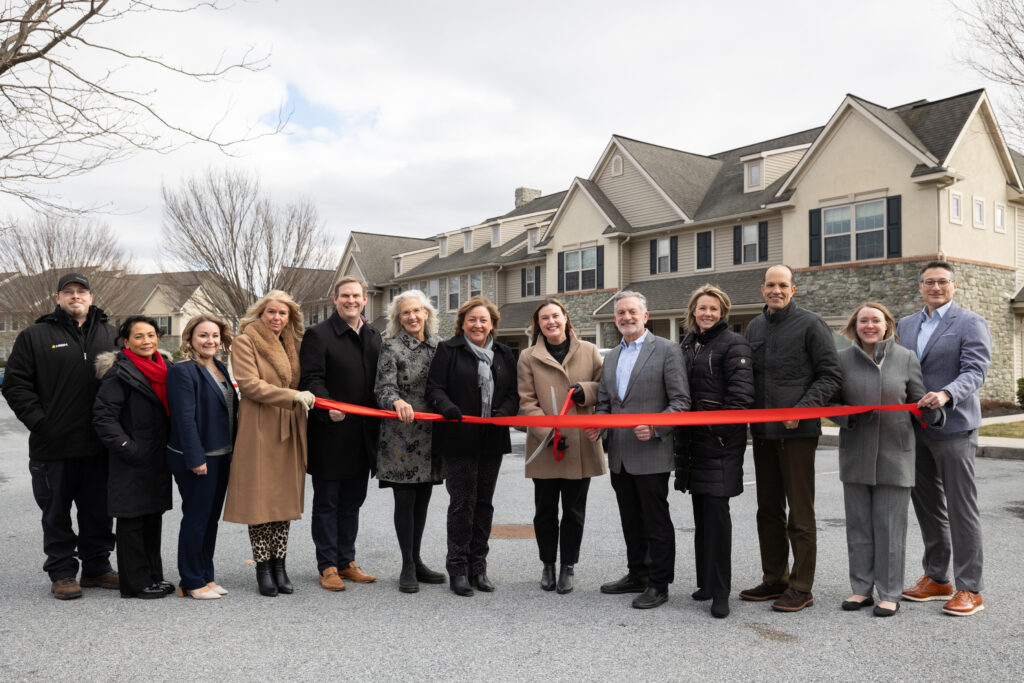
McKenna: This is going to be a big focus for the Coalition for Sustainable Housing. It is part of Lancaster Housing Works’s strategy, as well, to reach our goal of creating missing middle units. The first property that Lancaster Housing Works was able to acquire was Stonecreek Court in Ephrata. Those units are now preserved as affordable in perpetuity for that 50% to 80% of area median income. If that community had been sold to another developer, it’s quite possible that rates would’ve increased and some folks who live there might not have been able to afford it anymore and would’ve gotten displaced.
biznewsPA: What’s the pitch to property owners who are looking to retire and might be able to get more money from a private investor that will potentially raise rates? How do you convince them that it’s better for them to sell to you or to someone else that is going to keep it affordable?
McKenna: There are a decent number of property owners out there who are, of course, focused on profit, but also focused on doing good in the community. Appealing to that sense and the opportunity to still do well financially through a transaction but knowing that their residents are going to be taken care of for the long haul, I think that’s compelling. Recognizing a connection to the workforce is really helpful, as well. The Lancaster Chamber recently convened a conversation about affordable housing and how this impacts all of their members. If their members can’t find enough workers or their workers are struggling with long commutes, that leads to retention issues. We’re not the only voice in the conversation.’
biznewsPA: What could they do as employers to address the challenge?
McKenna: One is going back to the zoning reform conversation. Employers in a particular location carry a lot of weight with their local elected officials. They can say, ‘Hey, we want higher-density housing in this place. It aligns with the urban growth boundaries.’ Or maybe it’s an infill project. But it’s saying, ‘Hey, it’s not just the developers asking for this. We want it too.’ That, I think, will carry a lot of weight, making that direct connection to how this helps our workforce, helps our tax base. The second thing they can do is be partners in the effort. One of the things we’re doing for Lancaster Housing Works is a capital campaign. We’re asking individuals, companies, foundations to support the philanthropic part of our capital stack. And that’s another place where companies can invest in ways that deliver units in the places where they have a significant presence.
biznewsPA: How do you convince local officials to see the need for reform or at least the potential for reform to help ease the crunch?
McKenna: There’s an interest and appetite. Part of the process that the High Foundation went through to develop Lancaster Housing Works was a deliberative forum with municipal officials. They were interested in pursuing zoning reform and recognizing that within zoning reform there are different pathways to creating the opportunity for new housing, and that can look different in each community. It might be subdividing a home in Lancaster City for example. In other parts, maybe it is a larger apartment complex with a lot of units or in another community it might be folks who want to turn detached garages into accessory dwelling units. Each community can design their regulations in a way that allows those processes to unfold with whatever degree of input and oversight they feel they need.
biznewsPA: Do you see the housing crunch easing at some point? Interest rates are going up, construction is still relatively slow. What’s your forecast?
McKenna: There might be a difference between my wishes and hopes and the forecast, but I feel very hopeful that we’re going to be able to do some big things, hopefully having a very different conversation about housing.