Subscribe to our newsletters!

The fractional organization: What if stewardship means doing less?

Column by Brandon Rogers and Layne Lebo

Organizations have traditionally been built around a fairly simple premise: define a role, hire someone to fill it, and give that person responsibility for everything that falls inside the box. It makes sense. It also creates a tremendous amount of waste.

We recently found ourselves talking about this from two very different perspectives. One of us spends his days in business, finance and organizational strategy. The other has spent decades in pastoral leadership, thinking deeply about people, ministry and the health of organizations. Somewhere in the conversation, the two worlds began to sound remarkably similar. We were both asking what happens when organizations continue allocating their most precious resources – money, time, talent, emotional capacity and intellect – based primarily on roles that were defined years ago rather than the needs and opportunities sitting in front of them today.

That led us to a question we haven’t been able to shake: What if the future of healthy organizations is more fractional than we think?

Fractional is bigger than cost

Business has already begun experimenting with the idea. Fractional CFOs, HR leaders, COOs, strategists and other executives are becoming increasingly common because organizations have realized they may not need 40 or 50 hours of one executive every week. They may need 10 exceptional hours of financial leadership, another 10 hours somewhere else in the organization and access to a perspective they could never justify hiring full-time.

The economics can be compelling, but there is something much more interesting happening underneath them. Fractional thinking forces an organization to become more deliberate about allocation. Every person has work where their experience creates an outsized return. There is also work they continue to perform because at some point it became attached to their title or their position, or it is simply the way the organization has always operated.
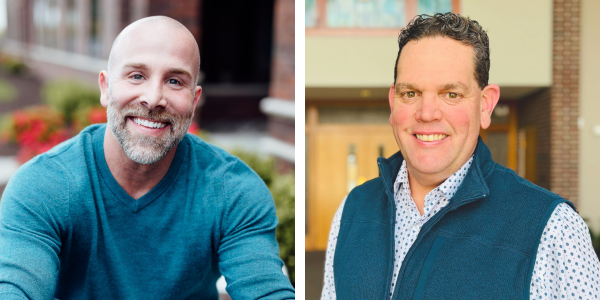
Brandon Rogers, left, and Layne Lebo

Over time, those hours add up.

Imagine a gifted leader who is exceptional at vision, growth, teaching and organizational strategy. The traditional structure may still require that person to spend enormous amounts of time counseling, administering, maintaining programs or managing details. Somewhere nearby may be another person who finds tremendous meaning in exactly that work and possesses gifts the first leader could never manufacture.

That creates a different question. How much organizational capacity is lost every day because we continue asking gifted people to become more complete rather than building teams whose gifts complete one another? We have spent decades designing jobs. Maybe we should spend more time designing systems around human capacity.

And perhaps capacity itself deserves a broader definition. There is a difference between being capable of doing something and being deeply alive while doing it. Most seasoned leaders can perform a remarkable range of work. Experience teaches us how to survive outside our natural strengths. Responsibility often requires it. But the longer we lead, the more interesting question may become whether we should continue spending so much of ourselves there.

Layne describes this as a leader’s “sweet spot” – the place where the work seems to draw something out of us rather than continually taking something away. There is energy there. Work still requires effort, sometimes enormous effort, but there is a strange replenishment that comes with it. We recognize ourselves in the work. That substantively changes the stewardship conversation.

Stewardship includes people

We are comfortable talking about stewardship when the resource is financial. Where should the next dollar go? What deserves additional investment? What has stopped producing the impact it once did? Where could the same resource create considerably more value?

The same rigor can be applied to people while recognizing that human capacity is infinitely more complex than capital. An hour carries energy, intellect, experience, emotion, creativity and ultimately a portion of someone’s life. Understanding where that hour can create its greatest contribution may be one of the most important responsibilities a leader carries.

It may also be one of the most important responsibilities a leader carries for himself or herself.

John Maxwell has observed that much of our early professional life is spent doing what is asked of us. We learn. We take assignments. We discover where we are strong partly by spending years discovering where we are not. There is something appropriate about that season. Maybe even comfortable. Yet maturity should eventually produce greater clarity about where our lives create their best work. If experience teaches us anything, perhaps it should teach us where to spend ourselves.

There is something troubling about a leader becoming more accomplished while moving progressively farther away from the work that gives that person life. By our 40s, 50s and beyond, we have accumulated enough evidence to recognize patterns. We know which rooms sharpen us. We know which work consistently empties us. We have watched ourselves succeed at things we probably shouldn’t spend another decade doing.

Fractional thinking creates room to act on that knowledge. A leader can gradually move toward the place where experience and energy meet, while allowing someone else to step more fully into the work that fits them. Done thoughtfully, the organization becomes stronger and the people inside it become more sustainable.

That also requires discipline. Fractional thinking cannot become permission to hand someone else all the work we don’t enjoy. Every organization needs people willing to tend what has already been planted. Every organization needs its gardeners – the people who notice who is hurting, preserve relationships, maintain what has been built and remember the person everyone else forgot. Those gifts deserve the same intentionality.

Layne described a longtime colleague whose natural instinct was toward care and counseling, work that genuinely gave him life. Layne’s instinct pulled more naturally toward growth, teaching, vision and what could come next. Their differences created strength because each brought something the other could not replicate. The leadership challenge became understanding how to release both of them toward their gifts while still protecting each from allowing those gifts to consume every available hour.

Even the gardener has to know when to stop gardening.

This may be one of the quiet promises of a fractional organization. People can become more fully themselves as the organization becomes less dependent on any one person being everything.

And that may be where fractional thinking becomes something much deeper than an employment model. It begins asking us to steward financial resources, intellectual resources, emotional resources and human resources with the same level of intentionality.

The courage to reallocate

This becomes harder when the conversation moves from people to programs, departments, ministries and longstanding organizational commitments. Businesses can talk clinically about eliminating underperforming assets. In churches and mission-driven organizations, those conversations carry people, history, relationships and often years of deeply meaningful work. That history deserves respect. It also deserves honest evaluation.

Pruning offers an interesting way to think about it. Resources released from one place can be reinvested somewhere they have an opportunity to grow again. A person may flourish in another role. A ministry may find new life in another location. A program may need to become smaller so another can become stronger. The resource remains valuable even when its current allocation no longer produces health.

Of course, reallocation sounds considerably cleaner on paper than it feels to the people experiencing it. A business line that disappears once represented someone’s idea and years of work. A ministry that closes may carry generations of history. A person released from a role experiences the decision personally, regardless of how thoughtfully the organization arrived there. Stewardship doesn’t erase any of that. A consequential decision remains consequential.

This is where Edwin Friedman’s work on family systems becomes particularly interesting. Friedman observed how unhealthy systems can gradually organize enormous amounts of energy around their least healthy members. Organizations can develop the same tendency. The struggling program receives another year. The misplaced leader receives another six months. Resources slowly migrate toward maintaining areas everyone quietly recognizes are unhealthy. Three months becomes six. Six becomes twelve.

Leadership eventually requires enough nerve to interrupt the pattern, name what everyone can already see and make a decision. There is compassion in clarity.

There is responsibility afterward, too. What does an organization owe the person whose role disappears? How should a church honor a ministry whose season appears to be ending? What does faithful leadership look like when the decision that creates health for the whole creates genuine loss for someone within it?

Those questions deserve more than a convenient answer.

Perhaps this is where the fractional organization ultimately leads us. It gives leaders permission to continually examine where their resources are producing life, where they are being depleted and where a thoughtful reallocation could create something healthier. It allows us to build organizations around complementary people and to recognize that the optimal amount of any resource may change as the organization changes.

It also invites leaders to ask the same questions about their own lives. Am I spending more of myself where I am becoming more useful, more alive and more deeply aligned with the work I am here to do? Has experience given me greater freedom to choose well? Or have success and responsibility simply created a more sophisticated version of the same box I entered years ago?

Use less where less is enough. Invest deeply where the opportunity warrants it. Give people more of their lives to the work where their gifts can create the greatest contribution, while building teams capable of carrying the responsibilities that remain.

That’s a serious idea. It applies to a local church, a $100 million nonprofit, a professional services firm, a family business, or a Fortune 500 company.

We began this conversation wondering whether fractional thinking could help organizations use their resources more wisely. The conversation keeps widening. It reaches organizational design, certainly, but eventually it reaches the leader. It asks what we should do with experience once we have earned it. It asks whether stewardship includes the life of the person doing the stewarding.

And maybe it asks one more uncomfortable question: If we already know where we do our best work, how long should we keep giving so much of our lives to everything else?

Perhaps that is the real promise of the fractional organization: becoming increasingly thoughtful about what we have been given, increasingly courageous about where we place it, and increasingly willing to move it when we know it could produce more somewhere else.

That sounds a lot like stewardship.


Brandon Rogers is founder and principal of 2R Consulting Group, a financial consulting firm based in the Harrisburg area.

Layne Lebo is lead pastor at Mechanicsburg Brethren in Christ Church.

Executive Insights is a recurring feature from biznewsPA. It provides local business executives and leaders a platform for sharing advice and perspective with the business community of Central Pennsylvania. If you are interested in contributing an executive insight, email [email protected].

Column by Brandon Rogers and Layne Lebo

Organizations have traditionally been built around a fairly simple premise: define a role, hire someone to fill it, and give that person responsibility for everything that falls inside the box. It makes sense. It also creates a tremendous amount of waste.

We recently found ourselves talking about this from two very different perspectives. One of us spends his days in business, finance and organizational strategy. The other has spent decades in pastoral leadership, thinking deeply about people, ministry and the health of organizations. Somewhere in the conversation, the two worlds began to sound remarkably similar. We were both asking what happens when organizations continue allocating their most precious resources – money, time, talent, emotional capacity and intellect – based primarily on roles that were defined years ago rather than the needs and opportunities sitting in front of them today.

That led us to a question we haven’t been able to shake: What if the future of healthy organizations is more fractional than we think?

Fractional is bigger than cost

Business has already begun experimenting with the idea. Fractional CFOs, HR leaders, COOs, strategists and other executives are becoming increasingly common because organizations have realized they may not need 40 or 50 hours of one executive every week. They may need 10 exceptional hours of financial leadership, another 10 hours somewhere else in the organization and access to a perspective they could never justify hiring full-time.

The economics can be compelling, but there is something much more interesting happening underneath them. Fractional thinking forces an organization to become more deliberate about allocation. Every person has work where their experience creates an outsized return. There is also work they continue to perform because at some point it became attached to their title or their position, or it is simply the way the organization has always operated.

Brandon Rogers, left, and Layne Lebo

Over time, those hours add up.

Imagine a gifted leader who is exceptional at vision, growth, teaching and organizational strategy. The traditional structure may still require that person to spend enormous amounts of time counseling, administering, maintaining programs or managing details. Somewhere nearby may be another person who finds tremendous meaning in exactly that work and possesses gifts the first leader could never manufacture.

That creates a different question. How much organizational capacity is lost every day because we continue asking gifted people to become more complete rather than building teams whose gifts complete one another? We have spent decades designing jobs. Maybe we should spend more time designing systems around human capacity.

And perhaps capacity itself deserves a broader definition. There is a difference between being capable of doing something and being deeply alive while doing it. Most seasoned leaders can perform a remarkable range of work. Experience teaches us how to survive outside our natural strengths. Responsibility often requires it. But the longer we lead, the more interesting question may become whether we should continue spending so much of ourselves there.

Layne describes this as a leader’s “sweet spot” – the place where the work seems to draw something out of us rather than continually taking something away. There is energy there. Work still requires effort, sometimes enormous effort, but there is a strange replenishment that comes with it. We recognize ourselves in the work. That substantively changes the stewardship conversation.

Stewardship includes people

We are comfortable talking about stewardship when the resource is financial. Where should the next dollar go? What deserves additional investment? What has stopped producing the impact it once did? Where could the same resource create considerably more value?

The same rigor can be applied to people while recognizing that human capacity is infinitely more complex than capital. An hour carries energy, intellect, experience, emotion, creativity and ultimately a portion of someone’s life. Understanding where that hour can create its greatest contribution may be one of the most important responsibilities a leader carries.

It may also be one of the most important responsibilities a leader carries for himself or herself.

John Maxwell has observed that much of our early professional life is spent doing what is asked of us. We learn. We take assignments. We discover where we are strong partly by spending years discovering where we are not. There is something appropriate about that season. Maybe even comfortable. Yet maturity should eventually produce greater clarity about where our lives create their best work. If experience teaches us anything, perhaps it should teach us where to spend ourselves.

There is something troubling about a leader becoming more accomplished while moving progressively farther away from the work that gives that person life. By our 40s, 50s and beyond, we have accumulated enough evidence to recognize patterns. We know which rooms sharpen us. We know which work consistently empties us. We have watched ourselves succeed at things we probably shouldn’t spend another decade doing.

Fractional thinking creates room to act on that knowledge. A leader can gradually move toward the place where experience and energy meet, while allowing someone else to step more fully into the work that fits them. Done thoughtfully, the organization becomes stronger and the people inside it become more sustainable.

That also requires discipline. Fractional thinking cannot become permission to hand someone else all the work we don’t enjoy. Every organization needs people willing to tend what has already been planted. Every organization needs its gardeners – the people who notice who is hurting, preserve relationships, maintain what has been built and remember the person everyone else forgot. Those gifts deserve the same intentionality.

Layne described a longtime colleague whose natural instinct was toward care and counseling, work that genuinely gave him life. Layne’s instinct pulled more naturally toward growth, teaching, vision and what could come next. Their differences created strength because each brought something the other could not replicate. The leadership challenge became understanding how to release both of them toward their gifts while still protecting each from allowing those gifts to consume every available hour.

Even the gardener has to know when to stop gardening.

This may be one of the quiet promises of a fractional organization. People can become more fully themselves as the organization becomes less dependent on any one person being everything.

And that may be where fractional thinking becomes something much deeper than an employment model. It begins asking us to steward financial resources, intellectual resources, emotional resources and human resources with the same level of intentionality.

The courage to reallocate

This becomes harder when the conversation moves from people to programs, departments, ministries and longstanding organizational commitments. Businesses can talk clinically about eliminating underperforming assets. In churches and mission-driven organizations, those conversations carry people, history, relationships and often years of deeply meaningful work. That history deserves respect. It also deserves honest evaluation.

Pruning offers an interesting way to think about it. Resources released from one place can be reinvested somewhere they have an opportunity to grow again. A person may flourish in another role. A ministry may find new life in another location. A program may need to become smaller so another can become stronger. The resource remains valuable even when its current allocation no longer produces health.

Of course, reallocation sounds considerably cleaner on paper than it feels to the people experiencing it. A business line that disappears once represented someone’s idea and years of work. A ministry that closes may carry generations of history. A person released from a role experiences the decision personally, regardless of how thoughtfully the organization arrived there. Stewardship doesn’t erase any of that. A consequential decision remains consequential.

This is where Edwin Friedman’s work on family systems becomes particularly interesting. Friedman observed how unhealthy systems can gradually organize enormous amounts of energy around their least healthy members. Organizations can develop the same tendency. The struggling program receives another year. The misplaced leader receives another six months. Resources slowly migrate toward maintaining areas everyone quietly recognizes are unhealthy. Three months becomes six. Six becomes twelve.

Leadership eventually requires enough nerve to interrupt the pattern, name what everyone can already see and make a decision. There is compassion in clarity.

There is responsibility afterward, too. What does an organization owe the person whose role disappears? How should a church honor a ministry whose season appears to be ending? What does faithful leadership look like when the decision that creates health for the whole creates genuine loss for someone within it?

Those questions deserve more than a convenient answer.

Perhaps this is where the fractional organization ultimately leads us. It gives leaders permission to continually examine where their resources are producing life, where they are being depleted and where a thoughtful reallocation could create something healthier. It allows us to build organizations around complementary people and to recognize that the optimal amount of any resource may change as the organization changes.

It also invites leaders to ask the same questions about their own lives. Am I spending more of myself where I am becoming more useful, more alive and more deeply aligned with the work I am here to do? Has experience given me greater freedom to choose well? Or have success and responsibility simply created a more sophisticated version of the same box I entered years ago?

Use less where less is enough. Invest deeply where the opportunity warrants it. Give people more of their lives to the work where their gifts can create the greatest contribution, while building teams capable of carrying the responsibilities that remain.

That’s a serious idea. It applies to a local church, a $100 million nonprofit, a professional services firm, a family business, or a Fortune 500 company.

We began this conversation wondering whether fractional thinking could help organizations use their resources more wisely. The conversation keeps widening. It reaches organizational design, certainly, but eventually it reaches the leader. It asks what we should do with experience once we have earned it. It asks whether stewardship includes the life of the person doing the stewarding.

And maybe it asks one more uncomfortable question: If we already know where we do our best work, how long should we keep giving so much of our lives to everything else?

Perhaps that is the real promise of the fractional organization: becoming increasingly thoughtful about what we have been given, increasingly courageous about where we place it, and increasingly willing to move it when we know it could produce more somewhere else.

That sounds a lot like stewardship.


Brandon Rogers is founder and principal of 2R Consulting Group, a financial consulting firm based in the Harrisburg area.

Layne Lebo is lead pastor at Mechanicsburg Brethren in Christ Church.

Executive Insights is a recurring feature from biznewsPA. It provides local business executives and leaders a platform for sharing advice and perspective with the business community of Central Pennsylvania. If you are interested in contributing an executive insight, email [email protected].
Share:

Gladly Sponsored By:

The main tool we use for the BizNewsPA newsletter is ActiveCampaign.

ActiveCampaign helps us manage our subscribers, build the newsletter, and schedule it for our bright and early release time.

If you think ActiveCampaign can help you and your business, click here.

More Central PA News

Legal

York law firm expands in Adams County

CGA Law Firm has absorbed a small legal practice in Gettysburg, the second acquisition this year by the growth-minded law firm. Based in York, CGA also purchased the Gettysburg office of the practice, Hartman & Yannetti, as its first foothold in the Adams County borough. A CGA affiliate paid $500,000 for the office, which is at 126 […]

To access this post, you must purchase biznewsPA Subscription or biznewsPA Team Subscriptions.

Read More »
Construction

More vacant Harrisburg office buildings headed for apartment makeover

A developer is proposing to transform a pair of empty Harrisburg office buildings into apartments, continuing a string of office-to-residential conversions in the capital city’s downtown area. The roughly $6 million conversion plan, submitted by developer Adam Breneman and Breneman Commercial Properties LLC, would put 38 apartments into buildings in the 100 block of North Second […]

To access this post, you must purchase biznewsPA Subscription or biznewsPA Team Subscriptions.

Read More »
Energy

Report sees spike in data center power demand in PA

The territory served by PPL Electric Utilities is ground zero for a projected surge in power demand from data centers over the next five years, according to an annual forecast published yesterday by state utility regulators. The forecast projects electricity demand in PPL’s territory will rise at an annual rate of 20.51% per year between 2026 and […]

To access this post, you must purchase biznewsPA Subscription or biznewsPA Team Subscriptions.

Read More »
Legal

Shuttered York County winery renews new legal bid to reopen

The legal battle over a shuttered York County winery still has some juice. In late August, Moon Dancer Vineyards & Winery launched another legal effort to reopen, arguing that a majority of its neighbors are now on board with its operations. A York County judge rejected a similar claim earlier this year after two conflicting votes by […]

To access this post, you must purchase biznewsPA Subscription or biznewsPA Team Subscriptions.

Read More »
Banking/Finance

State ups limit on small-biz loans

A state authority has raised the lending cap for borrowers tapping a low-interest loan program to cover real estate and construction costs. The statewide cap for the Pennsylvania Industrial Development Authority‘s Small Business First lending program is now $1 million or 50% of a project’s cost, whichever is less. The limit had been $400,000, in place […]

To access this post, you must purchase biznewsPA Subscription or biznewsPA Team Subscriptions.

Read More »
Accounting

State tax proposal draws flak

If you sell a new car in Pennsylvania, it’s pretty clear where the profits should be taxed. But when you’re selling a service, the picture gets foggier. State tax collectors are trying to clear things up, but they’re facing pushback from business lobbyists. At the heart of the dispute is how much leeway the state […]

To access this post, you must purchase biznewsPA Subscription or biznewsPA Team Subscriptions.

Read More »